For many hospitals across the United States, claim denials have become a persistent operational challenge. Claims are submitted, responses return days or weeks later, and a significant portion are denied or underpaid. The encouraging reality is that hospitals can realistically reduce denials by up to 30 percent by improving their Revenue Cycle Management (RCM) workflows and focusing on denial prevention rather than denial cleanup.
Denials often increase because of complex payer policies, documentation gaps, weak eligibility verification, and fragmented processes across departments. While hospital staff work hard to resolve issues, the underlying workflows often create opportunities for errors before a claim even reaches the payer. Improving healthcare claims processing requires redesigning how information flows through the revenue cycle.
Traditionally, claim denial management focuses on fixing denied claims after they occur. Teams review remittance advice, correct errors, and resubmit appeals. While this work is necessary, it is expensive and time-consuming. Denial prevention strategies take a different approach. Hospitals analyze denial data to identify broken processes, correct upstream workflow issues, and align teams around first-pass payment success.
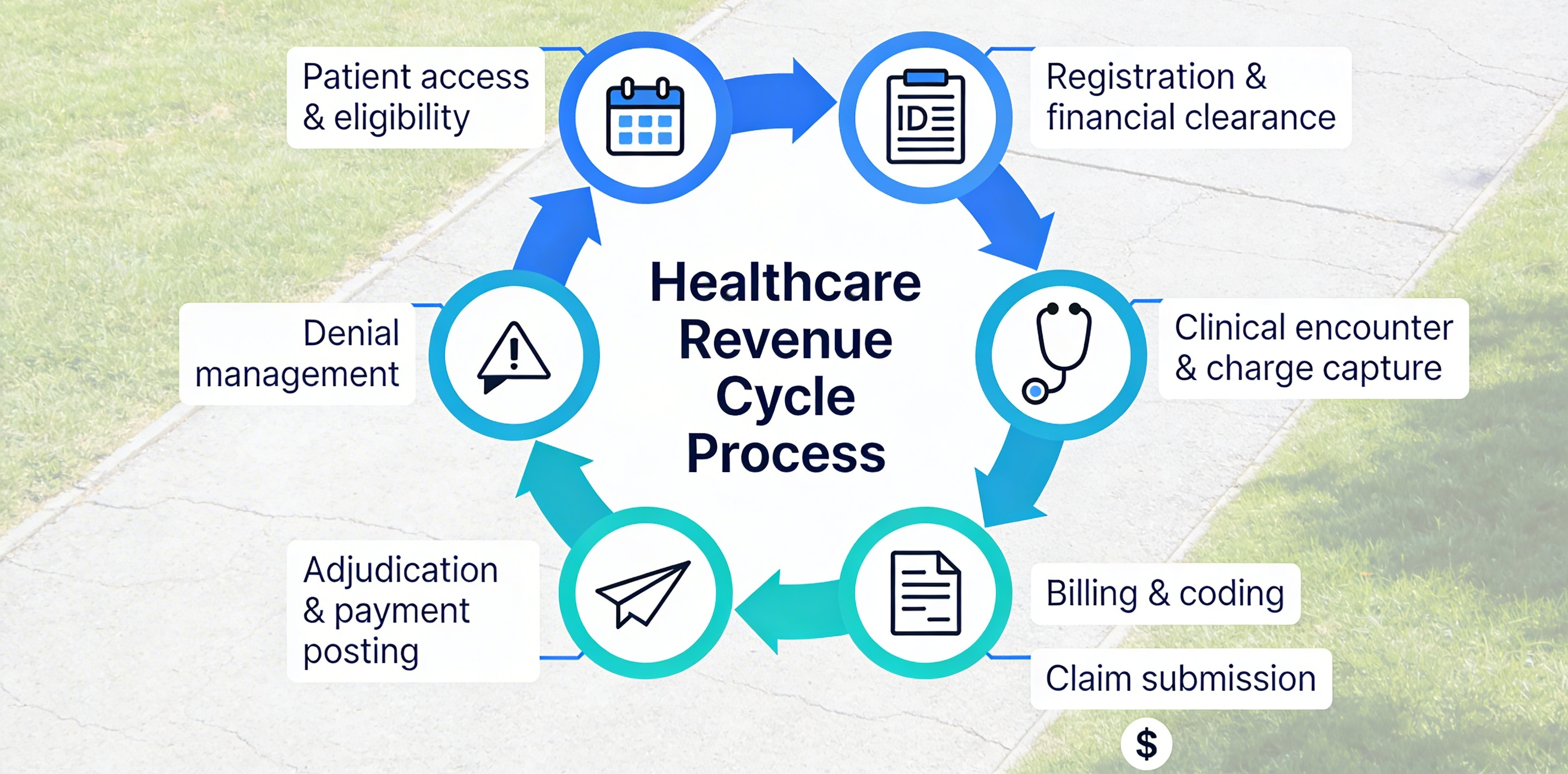
One of the most effective ways to reduce denials is mapping the full healthcare revenue cycle. Hospitals should document how a claim moves from patient scheduling through eligibility verification, prior authorization, clinical documentation, coding, claim creation, submission, payment posting, and denial review. Once the end-to-end workflow is visible, bottlenecks and risk points become easier to identify and correct.
Many denials originate at the front end of the revenue cycle. Improving eligibility verification, confirming coordination of benefits, and validating payer plan details before the patient visit can significantly reduce avoidable denials. Standardizing prior authorization workflows and tracking approvals in shared systems also prevents authorization-related denials.
Another critical area is clinical documentation and medical coding. Even when eligibility checks are accurate, claims can be denied if documentation does not support medical necessity or if coding errors occur. Hospitals should invest in documentation education for clinicians, provide coders with access to physicians for clarification, and audit charts regularly for common denial triggers such as missing diagnoses or incorrect modifiers.
A strong claim denial management loop is also essential. Mature RCM organizations categorize denials by root cause, prioritize high-value recoveries, and provide feedback to departments responsible for the underlying errors. This approach turns denial data into actionable insight that strengthens the entire revenue cycle process.
Hospitals looking to reduce denials should focus on several high-impact RCM workflow improvements. Standardizing registration, eligibility verification, and authorization processes ensures consistent data quality. Automating eligibility checks, claim edits, and worklists can prevent errors before claims are submitted. Establishing simple performance metrics such as denial rate, first-pass resolution rate, and days to denial resolution helps leadership track progress.
Collaboration between departments is equally important. Denials rarely originate from a single mistake; they are typically the result of gaps between registration teams, clinicians, coders, and billing staff. Hospitals that review denial cases collectively and agree on process improvements across teams see faster and more sustainable reductions in denial rates.
Reducing claim denials by 30 percent is achievable when hospitals treat Revenue Cycle Management as a strategic process rather than a reactive function. Strong front-end workflows, accurate documentation, smart denial analytics, and continuous process improvement create a more efficient revenue cycle and healthier financial performance.
YAKKAY Healthcare works with hospitals and health systems to redesign RCM workflows with denial prevention at the center. By strengthening eligibility verification, authorization processes, documentation practices, coding accuracy, and analytics capabilities, YAKKAY helps healthcare organizations reduce avoidable denials, accelerate reimbursements, and create a more efficient healthcare revenue cycle.
Key Takeaways
✓ Process Optimization
Streamline your revenue cycle management for maximum efficiency.
✓ Compliance & Accuracy
Stay compliant with industry standards and reduce billing errors.
Why This Matters
Revenue cycle management is not just about billing; it's about the entire lifecycle of a patient account. From the moment an appointment is scheduled to the final payment, every step matters. Errors in the front office can lead to denials in the back office, affecting your practice's financial health.
Conclusion
Implementing these strategies takes time and dedication, but the payoff is substantial. Financial stability allows you to invest back into your practice, improve staff quality of life, and ultimately provide better care for your patients. Start with small, manageable improvements and build from there.