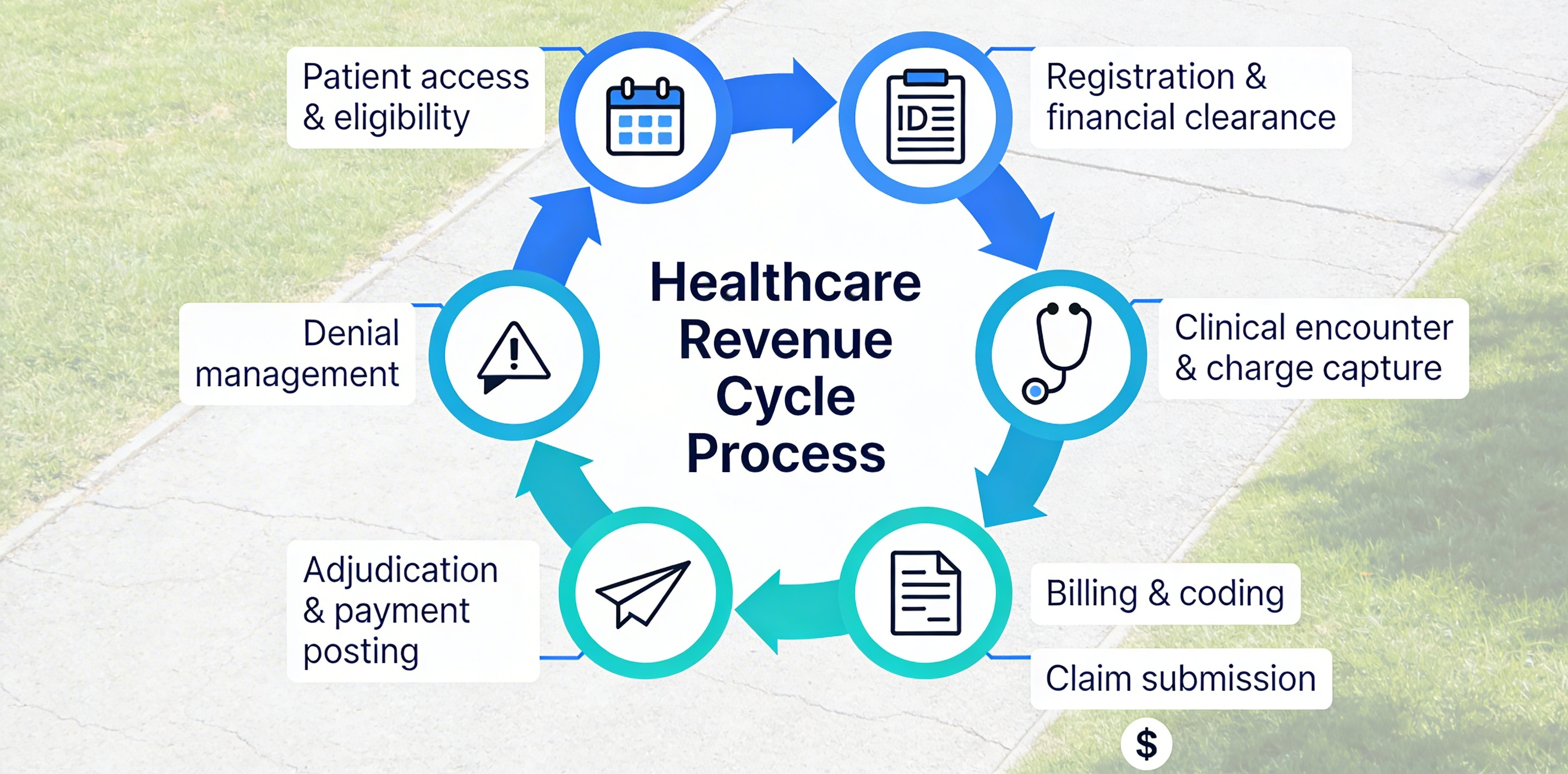

Many healthcare organizations use the terms RCM and medical billing interchangeably. Learn the key differences between Revenue Cycle Management and medical billing.
Key Takeaways
✓ Process Optimization
Streamline your revenue cycle management for maximum efficiency.
✓ Compliance & Accuracy
Stay compliant with industry standards and reduce billing errors.
Why This Matters
Revenue cycle management is not just about billing; it's about the entire lifecycle of a patient account. From the moment an appointment is scheduled to the final payment, every step matters. Errors in the front office can lead to denials in the back office, affecting your practice's financial health.
Conclusion
Implementing these strategies takes time and dedication, but the payoff is substantial. Financial stability allows you to invest back into your practice, improve staff quality of life, and ultimately provide better care for your patients. Start with small, manageable improvements and build from there.
Related Topics
Understanding Revenue Cycle Management (RCM) in Healthcare
Revenue Cycle Management (RCM) connects clinical care to financial outcomes in healthcare. Learn how the healthcare revenue cycle works and why it is critical for providers and payers.
How Hospitals Can Reduce Claim Denials by 30% with Better RCM Workflows
Learn how hospitals can reduce claim denials by up to 30% through smarter RCM workflows, stronger eligibility checks, better documentation, and effective denial prevention strategies.
Top 10 Reasons Healthcare Claims Get Denied and How to Fix Them
Claim denials are one of the biggest revenue challenges in healthcare. Discover the top 10 reasons claims get denied and proven strategies hospitals can use to reduce denial rates.